Overview
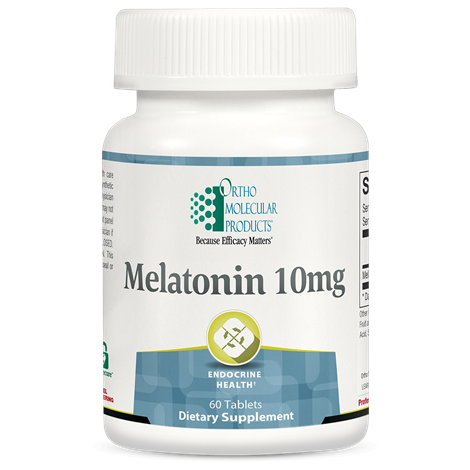
Melatonin is mainly produced in the pineal gland but is also found in the bone marrow, platelets, gastrointestinal (GI) tract, eyes, skin, and lymphocytes. Its chemical precursor is serotonin, a neurotransmitter derived from tryptophan. Serotonin must be acetylated and methylated to become melatonin. The synthesis and production of melatonin are influenced by light exposure to the eyes; serum levels of melatonin are usually low during daytime and increase in darkness. Because it significantly impacts circadian rhythms, melatonin has notable effects on sleep- wake cycles and antioxidant activity.
Deficiency
Nighttime melatonin secretion is highest during childhood and declines with age. Research indicates that melatonin supplements can support healthy sleep patterns in certain groups, such as the elderly, night-shift workers, and travelers crossing time zones. Low melatonin levels are often linked to sleep problems.
Sleep Support
Melatonin promotes healthy sleep quality, including falling asleep, sleep efficiency, and waking. In adults, studies have shown that doses between 0.3. 3 and 75 mg can positively influence total sleep duration and reduce the time needed to fall asleep. Two studies using 5 mg of melatonin in adults with delayed sleep found it shortened falling asleep time by 82 minutes and 115 minutes, respectively. A study involving participants who took melatonin for one week demonstrated improvements in sleep initiation, maintenance, quality, and activity compared to placebo. Another double-blind, placebo-controlled study with 33 subjects found that melatonin supported sleep onset, quality, depth, and duration without causing daytime sleepiness. Finally, a review of 10 trials suggests that melatonin supplementation can help improve sleep patterns in individuals crossing time zones.
Antioxidant Support
Melatonin has proven to be a potent antioxidant inducer. It enhances glutathione production and stimulates the activity of intracellular antioxidant enzymes, including superoxide dismutase and glutathione peroxidase. It also scavenges free radicals and helps maintain cytokine balance, which supports normal inflammatory responses. Additionally, melatonin can penetrate the lipid layer of low- density lipoprotein (LDL) and act as an antioxidant within cells. It has also been found to help maintain healthy blood pressure levels.